
Getting kids on the spectrum to do chores
Many children on the spectrum thrive with clear rules, predictable routines, and a direct link between “done” and “reward.” This guide explains why structure helps and how to build a chore system that reduces nagging and conflict.
Why structure and predictability matter
Kids on the spectrum often do best when expectations are explicit, the rule is the same every day, and the outcome doesn’t depend on tone or repeated reminders. Chores are no exception.
- Clear “done” — One or two concrete steps so the child knows exactly what finished looks like.
- Same rule every day — No “sometimes we do it this way, sometimes that way.” Predictability lowers anxiety.
- Visible cause and effect — When the chore is done, something consistent happens (e.g. screen time unlocks). The child doesn’t have to guess or rely on you to “remember” to give the reward.

What makes a chore system work for kids on the spectrum
Keep it simple, visual, and automatic. The less your child has to rely on verbal instructions or your mood, the better.
One chore (or a very short list)
Start with a single, well-defined task. “Put your plate in the dishwasher” or “Make your bed.” Add more only when the first one is solid.
Define “done” in one sentence
Write or say exactly what “done” looks like. If you can add a photo or checklist, even better. Ambiguity (“clean your room”) creates stress; clarity (“dirty clothes in the hamper, bed made”) helps.
Tie the reward to the rule—automatically
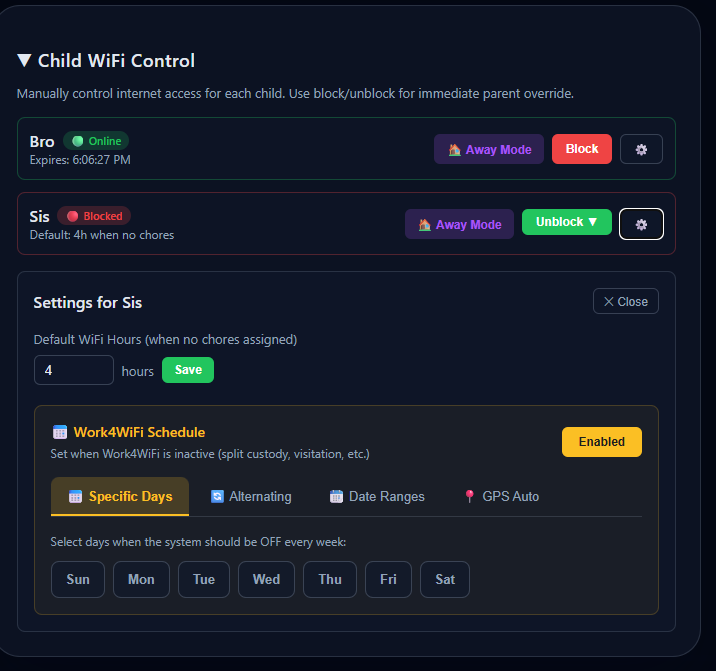
When the chore is done, the reward happens. No “remind me later” or “we’ll see.” Many families use “chores done → WiFi/screen time on” so the link is visible and the parent isn’t the gatekeeper every time.
Less verbal demand, less conflict
Repeated verbal reminders (“Did you do your chore?” “Chores first!”) can increase anxiety and resistance for many kids on the spectrum. When the rule is built into the environment, you don’t have to be the one saying it every day.
For example: if screen time or WiFi only turns on after the chore is verified, the child learns the pattern without you nagging. The system is the rule. You can stay calm and supportive instead of being the enforcer.

Common pitfalls (and what to do instead)
These are the things that often turn a good idea into daily battles. Small tweaks can make a big difference.
Too many chores or vague instructions
Start with one chore and one clear “done” definition. Add more only when the first is routine. “Clean your room” is vague; “Put toys in the bin and make the bed” is clear.
Reward depends on you remembering
If the reward only happens when you say so, the link feels unreliable. Whenever possible, make the reward automatic when the chore is done (e.g. WiFi unlocks after verification) so the cause-effect is consistent.
Changing the rule day to day
Consistency is key. Same rule, same time, same outcome. If you need to adjust, do it as a family and then keep the new rule steady for at least a week.
Arguing in the moment
Repeat the rule once, then step back. “Chores first, then screen time. Same as yesterday.” Let the system do the work so you’re not the one in a daily negotiation.
A system that enforces the rule for you
Work4WiFi was built so the rule is predictable: set chores once, your child submits proof when done, and WiFi or screen time unlocks automatically. No nagging, no “did you do it?”—just clear cause and effect. Works with the Work4WiFi Hub for every device in your home, or the app for Android.
Get Started FreeFAQ
Why do kids on the spectrum often struggle with chores?
Many children on the spectrum do best with clear, consistent rules and predictable cause-and-effect. Unclear expectations, too many steps at once, or rules that change can make chores feel overwhelming. Structure and visual clarity help.
What makes a chore system work for kids on the spectrum?
Predictability: the same rule every day. Clear “done” criteria. A concrete reward that happens automatically when the chore is done (e.g. WiFi unlocks) so the child doesn’t have to rely on verbal reminders or parent mood.
How do I reduce nagging and conflict around chores?
Let the system enforce the rule instead of you. When the outcome (e.g. screen time) is tied directly to the chore and happens automatically, you’re not the one saying “did you do it?”—the rule is the same every day, and the child can see the cause and effect.
Should I use a reward or a consequence for chores?
Many families find that framing it as “chores first, then screen time” (earned access) works better than punishment. The rule is neutral and predictable: complete the chore, get the reward. No drama, no negotiation.