Screen time rules for kids on the spectrum
Predictable rules and clear cause-and-effect can make screen time less stressful for everyone. This guide explains why consistency helps and how to set limits without turning into the daily enforcer.
Why predictable rules work better
Many children on the spectrum do best when the rule is the same every day and doesn’t depend on tone, reminders, or “we’ll see.” Screen time is no different.
- Same rule, same outcome — “Screen time after homework” or “WiFi off at 8” is easy to understand. No “sometimes yes, sometimes no.”
- Less verbal demand — When you’re not the one saying “time’s up” or “did you do your chore?”, there’s less pressure and fewer arguments. The system can enforce the rule.
- Clear cause and effect — The child sees: when I do X, I get Y. When time is up, access stops. Predictability reduces anxiety and bargaining.

Setting screen time limits without the daily fight
The more automatic the rule, the less you have to say. Here’s a simple way to think about it.
Choose one clear rule
Examples: “Screen time only after chores,” “WiFi off at 8 p.m.,” or “1 hour of games on school nights.” Pick one and keep it the same for at least a week.
Let the system enforce it
When WiFi or device access turns off automatically, you’re not the one “taking away” the screen. The rule is the rule. You can stay calm and supportive instead of arguing.
Use warnings if they help
Some kids on the spectrum transition better with a “5 minutes left” or “one more level” warning. Keep the same warning every day so it’s part of the routine.
Chores first, then screen time
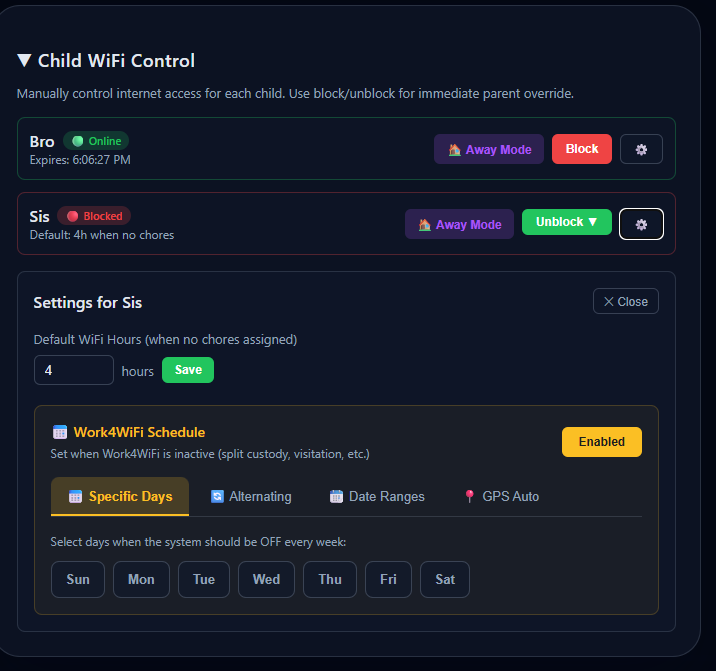
Linking screen time to a small set of chores is a common pattern that works well for many kids on the spectrum. One rule: finish the tasks, then access turns on. No “remind me later,” no negotiation.
When the link is automatic (e.g. your child marks chores done in an app, and WiFi unlocks), the cause-effect is visible. You’re not the one deciding “did they do enough?”—the system applies the same rule every day.

When screen time ends: transitions and meltdowns
Some children on the spectrum find it hard to switch off. Predictability and who enforces the rule both matter.
Same time or same duration every day
If the rule is “WiFi off at 8,” it’s 8 every day. If it’s “1 hour after school,” keep it to 1 hour. Consistency makes the transition easier to anticipate.
You’re not the one turning it off
When the system turns off access, you can say “the rule is the same as yesterday” and stay supportive. You’re not the villain—the rule is neutral and applied the same way every time.
Warnings that become routine
“5 minutes left” or a timer on the device can help some kids wind down. Use the same warning every day so it’s part of the routine, not a surprise.
One rule, then hold it
Resist changing the rule in the moment (“okay, 10 more minutes”). If you need to adjust, do it for tomorrow and then keep the new rule steady. Consistency beats one-off exceptions.
Screen time and chores—one predictable system
Work4WiFi lets you set chores and tie WiFi or screen access to “done,” plus schedule when access turns off. Same rule every day, enforced automatically, so you can focus on supporting your child instead of repeating the rule. Works with the Work4WiFi Hub for every device, or the app for Android.
Get Started FreeFAQ
Why do predictable screen time rules help kids on the spectrum?
Many children on the spectrum do better when the rule is the same every day and the outcome doesn't depend on verbal reminders or parent mood. Predictable rules reduce anxiety and arguments because the child knows exactly what to expect.
How do I set screen time limits without nagging?
Use a system that enforces the rule automatically—for example, WiFi or device access turns off at a set time or after a set duration. Then you're not the one saying "time's up"; the rule is consistent and visible.
Should screen time be tied to chores for kids on the spectrum?
Many families find that "chores first, then screen time" works well because it's one clear, repeatable rule. The child sees the cause and effect: complete the task, get access. No negotiation, same every day.
What if my child has a meltdown when screen time ends?
Predictability helps: same time or same duration every day. Warnings (e.g. "5 minutes left") can help some kids transition. When the limit is enforced by the system (e.g. WiFi off), you can stay calm and supportive instead of being the one "taking away" the device.